Nursing in Sri Lanka: What the Higher Diploma (NVQ Level 6) Actually Qualifies You For
Healthcare is one of the most stable and globally recognised career paths a Sri Lankan student can choose. But knowing which qualification to pursue, and what it actually opens up for you, is not always clear. This article looks at what the Higher Diploma in Nursing (NVQ Level 6) means in practical terms, what the job market in Sri Lanka actually looks like for qualified nurses, and what to consider when choosing a programme.
The Demand for Qualified Nurses in Sri Lanka
Sri Lanka's healthcare sector has faced a documented shortage of qualified nurses across both public and private hospitals for several decades. Research published in the Journal of Competitiveness noted that shortages in the public sector have persisted due to limited government nursing school intake, while the private sector has grown rapidly without a corresponding growth in trained nursing professionals to meet that demand.
The pressure is real and ongoing. Nurses working in government hospitals have spoken publicly about carrying patient loads well above recommended standards, in part because there simply are not enough trained professionals to go around. The private hospital sector, which has expanded considerably in Colombo and across the Western Province, draws significantly from the same pool of qualified nurses, creating consistent demand for new graduates entering the profession.
Globally, the picture is similar. The World Health Organization's State of the World's Nursing 2025 report recorded a global nursing workforce of 29.8 million in 2023, with a remaining shortage of 5.8 million nurses worldwide. Demand for nursing professionals continues to grow across Asia, the Middle East, the United Kingdom, Australia, and Canada, making a nursing qualification one of the more internationally portable qualifications a Sri Lankan student can earn today.
What is the NVQ Level 6 Qualification?
The National Vocational Qualification (NVQ) framework in Sri Lanka is managed by the Tertiary and Vocational Education Commission (TVEC). It runs from Level 1 through to Level 7, with each level representing a progressively higher standard of competency. NVQ Level 6 sits at the upper end of this framework and is recognised by TVEC as equivalent to bachelor degree level in terms of vocational competency.
In nursing, the NVQ Level 6 examination is the national professional assessment that determines whether a graduate meets the standard required to practice as a qualified nurse in Sri Lanka. Successfully passing this examination results in the student receiving an NVQ Level 6 Nursing certificate issued directly by TVEC, not by the training institution. The TVEC certificate is the nationally recognised credential that private hospitals and healthcare employers in Sri Lanka look for when recruiting nursing staff.
Institutions that offer the Higher Diploma in Nursing (NVQ Level 6) are accredited by both TVEC and the Private Health Services Regulatory Council (PHSRC), the regulatory body for private healthcare providers in Sri Lanka. These two accreditations together mean the training programme meets the standards set by both the education and the healthcare sectors.
What the Private Sector Actually Pays Nurses
Salary data for nurses in Sri Lanka varies considerably based on the source, the sector, and the level of experience involved. Using data from salary.lk, a registered nurse in Sri Lanka in 2025 typically earns between LKR 34,946 and LKR 78,359 per month in entry-level positions, rising to between LKR 58,556 and LKR 139,734 per month after five years of experience.
PayScale data for 2025 puts the average salary for a Registered Nurse in Sri Lanka at approximately LKR 701,830 per year, which works out to around LKR 58,000 per month. For nurses with critical care specialisations, that figure rises to an average of LKR 720,000 per year based on the same source.
The private hospital sector in Colombo consistently pays above government hospital rates. Healthcare career guides cite private sector and international hospital salaries running 20 to 40 percent higher than government equivalents, reflecting both the higher staffing budgets of private facilities and the direct competition for qualified staff.
How the Lyceum Campus Programme is Structured
The Higher Diploma in Nursing (NVQ Level 6) at Lyceum Campus is offered through the Faculty of Medical Sciences. The programme is delivered on campus with structured practical sessions and clinical training accounting for more than 50 percent of the total learning experience, meaning students spend the majority of their study time in practical settings rather than in lecture rooms.
Clinical training is conducted at Kings Hospital in Colombo, a modern private hospital environment that gives students consistent, supervised exposure to real patient care from relatively early in the programme. According to Lyceum Campus, clinical exposure begins as early as the fourth month of the programme, which is earlier than some competing programmes that begin clinical placements in the second year.
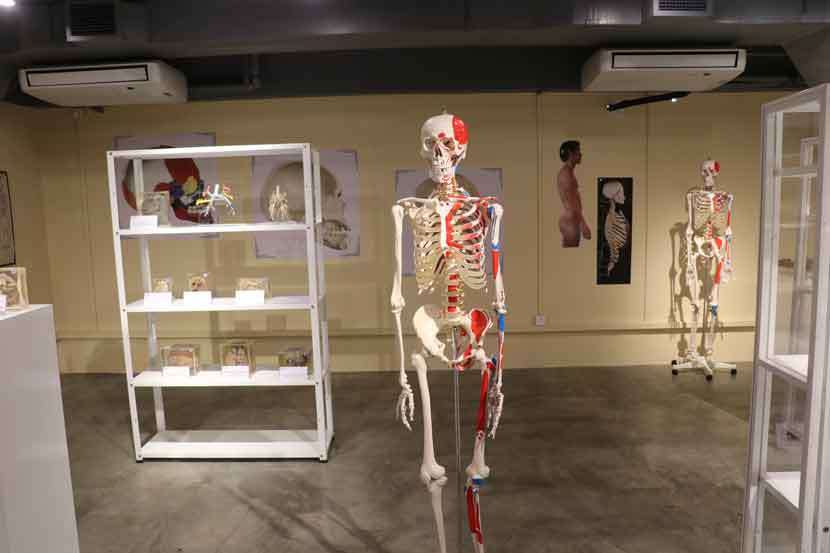
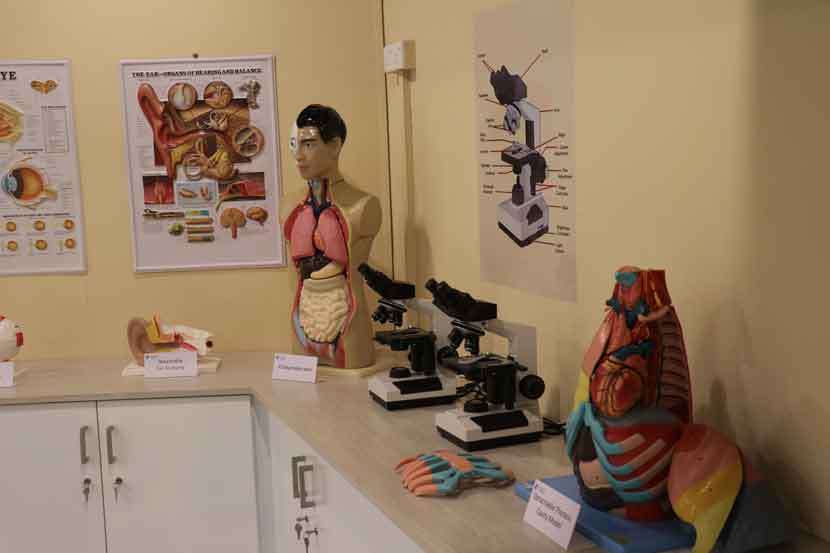
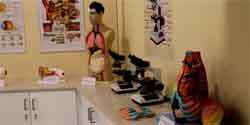
The programme is taught by experienced academics alongside senior healthcare professionals, and Lyceum Campus is equipped with a nursing skills laboratory that includes simulation facilities. Simulation labs allow students to practice clinical procedures and develop competency in a controlled environment before working with actual patients, which is recognised in nursing education as a significant factor in clinical confidence and safety.
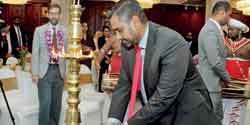
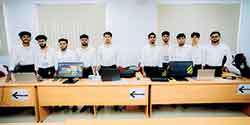
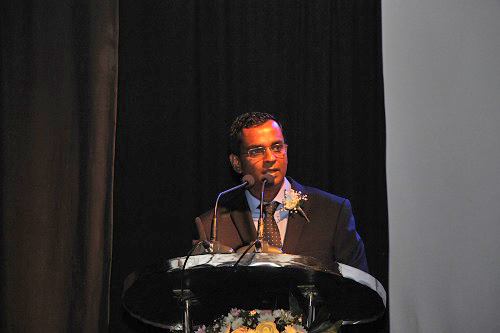
The Inaugural Batch Orientation for the Higher Diploma in Nursing was held on 30 March 2026 at Lyceum Campus. The event was addressed by Prof. Mohan De Silva, President of Lyceum Campus, and Dr. Upali Banagala, Director of Kings Hospital, with a session on what makes an effective nursing professional.
Kings Hospital and the Career Pathway Partnership
One of the more distinctive features of the Lyceum Campus nursing programme is its formal collaboration with Kings Hospital, Colombo. Clinical training is conducted at Kings Hospital, which gives students hands-on experience in a real hospital environment rather than a training facility. For selected students who meet the programme's academic and professional standards, there is also a guaranteed career pathway with Kings Hospital on successful completion of the programme.
This kind of direct employment pipeline between a training institution and a clinical partner is not standard in every nursing programme in Sri Lanka, and it addresses one of the genuine concerns prospective nursing students have, which is what happens after they graduate. A direct employment pathway removes some of that uncertainty and provides a structured entry point into the private healthcare sector for eligible graduates.
It is worth noting that the guaranteed career pathway applies to selected students who meet the programme's standards, not all graduates automatically. Prospective students should speak to the admissions team to understand the full conditions.
Who Can Apply
The Higher Diploma in Nursing (NVQ Level 6) at Lyceum Campus has two entry routes.
The first is for students who have completed their GCE Advanced Level examinations with a minimum of 3 passes. Students who do not have biology at A/Level are not automatically excluded, as Lyceum Campus offers a free bridging programme for those without A/L Biology, which addresses one of the practical barriers that has historically discouraged some otherwise capable students from pursuing a nursing career.
The second entry route is for applicants who already hold a relevant NVQ Level 4 qualification, which is intended for individuals already working in the healthcare sector who want to advance their formal qualification.
For students coming directly from school, the A/Level requirement means the programme sits at the post-A/Level stage, making it an alternative to pursuing a university degree through the conventional academic route for students who want a professional healthcare qualification with strong practical content.
Scholarships and Financial Access
Lyceum Campus offers merit-based scholarships of up to 50 percent off tuition fees for the nursing programme. The scholarship scheme is designed to make the programme accessible to students who performed well in their examinations but who might otherwise find the cost prohibitive.
The free bridging programme for students without A/L Biology is also worth noting as a form of financial and academic access, since it removes the cost and time of a separate preparatory course that students at other institutions might need to complete before qualifying for entry.
What Qualified Nurses in Sri Lanka Typically Work in
The range of roles available to nurses who complete the Higher Diploma and obtain their NVQ Level 6 certificate from TVEC is broader than many prospective students assume. Within Sri Lanka, qualified nurses work across private hospitals, public hospitals, private clinics and day-care centres, nursing homes and elder care facilities, occupational health roles within large organisations, and community health settings.
Within private hospitals, experienced nurses typically progress through general ward nursing into specialised roles in areas such as intensive care, neonatal care, operating theatres, emergency departments, and oncology. Each of these specialisations involves additional training and tends to carry higher salary levels.
There is also a significant international dimension to nursing careers for Sri Lankan graduates. Countries including the United Kingdom, Australia, Canada, and Gulf Cooperation Council countries consistently recruit nurses from Sri Lanka, and Sri Lankan nurses with TVEC-recognised qualifications have established a track record as competent and professionally prepared healthcare workers in those markets. The path to international registration varies by country and typically requires additional steps beyond the TVEC qualification alone, but the NVQ Level 6 forms a recognised foundation for those pathways.
Choosing a Nursing Programme in Sri Lanka: What to Look For
There are several nursing programmes available at private institutions in Sri Lanka, ranging from the same NVQ Level 6 standard to degree-level programmes. For a student choosing between them, the key factors that consistently matter most are the clinical training environment, the ratio of practical to theoretical content, and the accreditations held by the institution.
Clinical training quality is difficult to assess from a brochure. The hospital where training takes place, the supervision structure, and when clinical placements begin all have a significant bearing on how prepared a graduate will be. The 50 percent practical exposure figure at Lyceum Campus, and the early start to clinical placements from month four, are specific and verifiable points worth weighing against what other programmes offer.
Accreditation by both TVEC and PHSRC is the minimum to look for in any private nursing programme in Sri Lanka. These two accreditations are not optional extras. They are the credentials that determine whether a graduate's qualification will be accepted by employers in the private healthcare sector.
FAQ Section
What is the Higher Diploma in Nursing (NVQ Level 6)?
The Higher Diploma in Nursing (NVQ Level 6) is a professional nursing qualification offered by TVEC-accredited institutions in Sri Lanka. It combines academic learning with extensive hands-on clinical training and enables students to sit the national NVQ Level 6 nursing examination administered by the Tertiary and Vocational Education Commission (TVEC). Successfully passing this examination results in a TVEC-issued nursing certificate, which is the nationally recognised credential required to work as a qualified nurse in Sri Lanka's private healthcare sector.
What is the difference between the NVQ Level 6 certificate and the Higher Diploma?
The Higher Diploma in Nursing is the qualification awarded by the training institution when a student successfully completes the programme. The NVQ Level 6 certificate is awarded separately by TVEC on passing the national nursing examination. Students who complete the programme and pass the TVEC examination graduate holding both qualifications.
What are the entry requirements for the Higher Diploma in Nursing at Lyceum Campus?
You need either a minimum of 3 passes in the GCE Advanced Level examination, or a relevant NVQ Level 4 qualification. Students who do not have biology at A/Level can access the programme through a free bridging programme offered by Lyceum Campus.
Who accredits the nursing programme at Lyceum Campus?
The Higher Diploma in Nursing at Lyceum Campus is accredited by the Tertiary and Vocational Education Commission (TVEC) and the Private Health Services Regulatory Council (PHSRC). Both accreditations are required for a nursing programme to be formally recognised in Sri Lanka's private healthcare sector.
Where does clinical training take place?
Clinical training for the Higher Diploma in Nursing at Lyceum Campus takes place at Kings Hospital in Colombo. Clinical exposure begins from the fourth month of the programme, and practical training accounts for more than 50 percent of the total programme.
Is there a job guarantee after completing the programme?
Selected students who meet the programme's academic and professional standards are eligible for a guaranteed career pathway with Kings Hospital on successful completion of the programme. This applies to selected graduates, not all students automatically. Contact the Lyceum Campus admissions team for the full conditions.
What jobs can I get with the NVQ Level 6 nursing qualification in Sri Lanka?
With an NVQ Level 6 nursing certificate from TVEC, graduates are qualified to work as registered nurses in private hospitals, private clinics, nursing homes, occupational health settings, and community health roles across Sri Lanka. With experience, nurses typically progress into specialised roles in areas such as intensive care, operating theatres, emergency nursing, neonatal care, and oncology.
Can I work abroad with an NVQ Level 6 nursing qualification from Sri Lanka?
The NVQ Level 6 qualification from TVEC is recognised as a foundation for international nursing career pathways. Countries including the UK, Australia, Canada, and Gulf states regularly recruit qualified nurses from Sri Lanka. Working abroad typically requires additional registration steps specific to each country, such as passing the NMC registration process for the UK or AHPRA registration for Australia. Your TVEC qualification and clinical experience form the basis from which that registration process proceeds.
What is the scholarship available for the nursing programme?
Lyceum Campus offers merit-based scholarships of up to 50 percent off tuition fees for the Higher Diploma in Nursing programme. Contact the admissions team for current scholarship criteria and application details.
What is NVQ Level 6 equivalent to in academic terms?
Within the TVEC National Vocational Qualification framework, NVQ Level 6 is recognised as equivalent to bachelor degree level in terms of vocational competency. It represents a middle management or specialist practitioner standard in the relevant field.
















.jpg)
.jpg)
.jpg)
.jpg)
.jpg)