What Are the Benefits of Choosing a Campus With Multiple International Pathways?

Rather than relying on a single overseas university, a growing number of Sri Lankan higher education providers are now building portfolios of international partnerships. Within one campus, students may find Australian business degrees, UK education programmes, British vocational qualifications and locally awarded diplomas operating side by side. This represents a noticeable shift in how transnational education is being delivered in Sri Lanka.
For many years, an overseas qualification offered locally usually meant one institution working with one international university. Today, some campuses are adopting a different model by establishing multiple partnerships across different disciplines. The result is greater flexibility for students, who can compare a wider range of study pathways without moving between institutions.
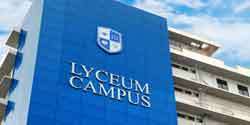
One example of this approach is Lyceum Campus in Nugegoda. Established in 2022 as the higher education arm of the Lyceum Education Group, it has developed several international progression routes alongside locally awarded qualifications. Rather than depending on a single overseas partner, the campus has built a portfolio of pathways that serve different academic interests and career goals.
Among these is its partnership with Deakin University, Australia, through a 1+2 pathway in Business Analytics, Management, Commerce and Sport Management. Students complete their first year in Sri Lanka before transferring to Australia to complete the remaining two years. Deakin Business School holds both AACSB and EQUIS accreditation, distinctions achieved by only a small percentage of business schools worldwide, providing students with an internationally recognised qualification.
The campus also offers progression to the University of the West of England (UWE Bristol) in Early Childhood Education through both a 2+1 pathway based on the Pearson BTEC Higher National Diploma and a 1+2 pathway based on Lyceum's own diploma. Having two entry routes gives students greater flexibility depending on their previous qualifications and financial circumstances.
Another pathway is delivered through Pearson UK, where students complete Higher National Diplomas in Business, Accounting & Finance, and Counselling & Applied Psychology. These qualifications are designed to provide practical, career-focused learning while also allowing progression to the final year of selected UK bachelor's degrees, subject to university entry requirements.
Unlike university-specific pathways, the Lyceum Global Foundation Programme offers students flexibility to progress to partner universities across Australia, the UK, New Zealand, Malaysia, Canada and Sri Lanka. Recognised by the Tertiary and Vocational Education Commission (TVEC), the programme provides a foundation in Business, Science, Information Technology and Engineering before students choose their preferred university destination.
Alongside its international offerings, Lyceum Campus also delivers programmes that directly support Sri Lanka's workforce needs. These include teacher education diplomas, a Bachelor of Education (Honours) in Primary Education, higher diplomas and healthcare programmes. This combination of local professional qualifications and international pathways enables students to pursue both overseas and locally focused careers within the same institution.
Education specialists note that this multi-partner model has been common for years in established education hubs such as Malaysia and Singapore but is only now becoming more visible in Sri Lanka. They also caution that the success of such a model depends not on the number of partnership logos displayed, but on maintaining strong academic governance and genuine long-term relationships with each international partner.
From a student's perspective, the benefits are clear: lower initial study costs, a smoother transition into overseas education, multiple progression options and the ability to compare different destinations under one roof. For institutions, diversifying partnerships also reduces reliance on a single overseas provider and creates greater resilience if market conditions change.
The growing adoption of this approach suggests that Sri Lanka's higher education sector is gradually evolving beyond the traditional one-partner model. If institutions continue to prioritise academic quality alongside international collaboration, students and parents are likely to benefit from greater choice, flexibility and clearer progression opportunities than ever before.
Frequently Asked Questions
What is a pathway programme?
A pathway programme allows students to complete part of a degree locally before transferring to an overseas university under a formal articulation agreement.
Will I receive the same degree?
In most pathway arrangements, students graduate with the same qualification awarded by the overseas university, provided all academic requirements are met.
Why are institutions offering multiple partnerships?
Multiple partnerships provide students with wider academic choices while allowing institutions to diversify opportunities across different disciplines and destinations.
How are BTEC Higher National Diplomas different?
BTEC HNDs are vocational qualifications that combine practical learning with opportunities to progress into the later stages of many bachelor's degree programmes.

















.jpg)
.jpg)
.jpg)
.jpg)
.jpg)
