When AI Crosses the Line: How teachers can tackle misuse without losing trust
 As artificial intelligence (AI) tools like ChatGPT become common in class rooms, teachers are encountering a new dilemma: how to respond when students misuse them. While these tools offer new opportunities for learning, their misuse especially in writing assignments is raising fresh questions about academic integrity, student wellbeing, and the future of education.
But instead of rushing to punish, educators are discovering that curiosity and conversation might be the key to confronting AI misuse.
A Shift in Strategy
When veteran high school teacher Jen Roberts noticed polished, out-of-character prose in a student’s essay, she didn’t accuse. She asked: “Tell me what happened here?” That question often opens the door to honesty. “About three-quarters of the time, students admit they used AI,” says Roberts. “They’re not trying to cheat maliciously they’re often overwhelmed or unsure how to start.” Her approach recently highlighted in an article on the Edutopia platform emphasises open-ended inquiry over confrontation. It’s part of a growing movement among educators to treat AI misuse not as a disciplinary issue, but as a teachable moment.
Misuse or Misunderstanding?
Teachers are trained to recognize patterns. When a student’s writing suddenly improves without explanation, it may prompt concern. Yet, jumping to conclusions can harm relationships. Instead, educators are being encouraged to ask processbased questions:
- “Walk me through how you wrote this.”
- “What were your biggest challenges with this topic?”
If the answers lack depth or don’t align with the student’s usual abilities it often becomes clear that AI played a role.
When It’s Unclear
Not every case is cut and dry. Sometimes suspicions linger without proof. In those cases, teachers are getting creative:
- Assigning a follow-up task in class to compare writing styles
- Asking students to recreate a paragraph or explain specific choices
- Using AI-detection tools (with caution, due to false positives)
Rather than creating an environment of fear, these strategies aim to preserve trust while encouraging accountability.
From Rule-Breaking to Reflection
When students do admit to using AI improperly, the goal isn’t punishment it’s reflection. “Why did you use it?” “How did it help or hurt your learning?” “What will you do differently next time?” These reflective questions, educators say, help students think critically about their choices and understand the value of original thought. In many cases, students reveal deeper issues: time pressure, lack of confidence, or confusion about what AI use is actually allowed.
Teaching Responsible AI Use
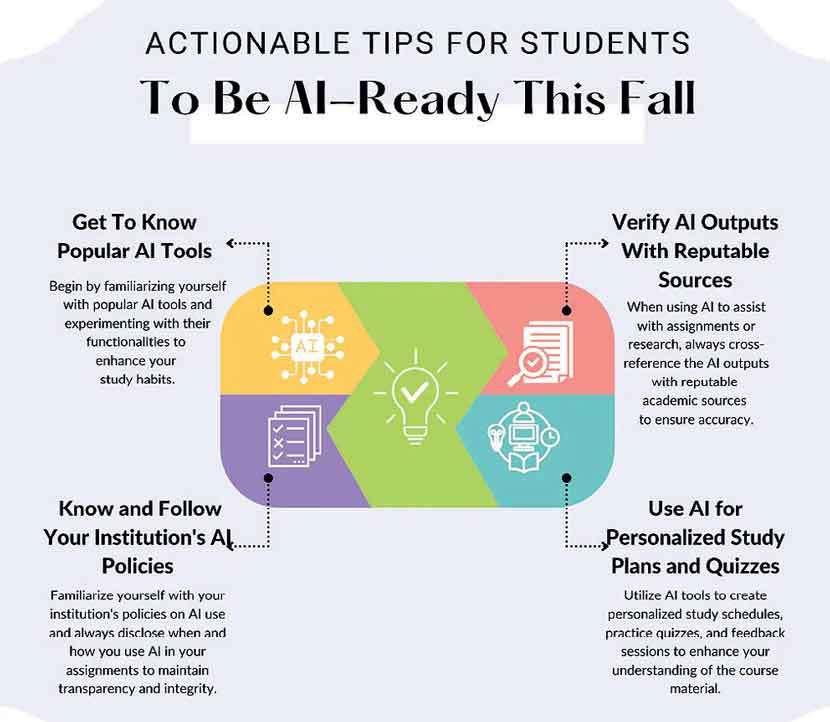
Rather than banning AI outright, many schools are beginning to integrate it into learning. Students are taught how to use AI tools ethically to brainstorm ideas, ask clarifying questions, or analyse different writing styles. Educators also emphasise transparency. “If you used AI, say so,” one teacher tells her students. “Let’s look at how you used it and whether it supported your thinking or replaced it.”
This approach mirrors guidance from education experts, who stress that students need clear frameworks, not fear-based rules. Teaching students how to think with AI not just whether to use it may be the key to long-term success.
The Bigger Picture
As AI becomes more sophisticated and accessible, the conversation is moving beyond cheating. It’s now about what kind of learners and citizens we want to develop. “Writing is more than getting words on a page,” Roberts reflects. “It’s about thinking, organising, and expressing who you are. If AI is doing all that for you, what are you actually learning?” In a world where AI is only a click away, teaching students to value the process over the product might be education’s most important lesson yet.






































.jpg)
.jpg)
.jpg)
.jpg)

.jpg)
