Reimagining education in Sri Lanka: Our children cannot afford to wait!
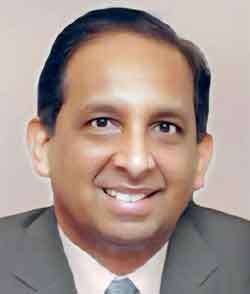 |
| Prof. Lakshman Samaranayake |
By Professor Lakshman Samaranayake This article is adapted from a recent keynote address delivered at the South Asian Centre for Teacher Development. Education in Sri Lanka stands at a critical crossroad. We are grappling not just with improving our system, but with an urgent need to fundamentally reimagine it. As a nation facing rapid global change, economic challenges, and social disparities, our classrooms must become engines of opportunity, equity and national progress.
The time for incremental change has passed; our students are already decades behind their peers in many developing nations. The recent, well-intentioned push for reform has revealed our systemic fragility. In January 2026, a simple proposal to add 30 minutes to the school day, to breathe life into the new competency-based curriculum, was met with immediate resistance from unions and parents alike, and was swiftly differed. Almost simultaneously, Grade 6 English modules had to be withdrawn from circulation after directing children to an ‘inappropriate’ website. These are not mere teething problems.
They are the sounds of a system straining to change gear without a clutch. If we continue to stall, the consequence is clear: our children risk being left on the slow lane of the global talent highway, memorising obsolete facts, while their counterparts in India, the United Kingdom, China and Vietnam gain practical credits in robotics, artificial intelligence and climate science. The blueprint for a way forward in this context rests on three intertwined pillars: Innovation, Inclusion and Impact.
Innovation: Beyond gadgets, towards a new mindset
True innovation in education is not defined by smartboards or tablets. It begins with a transformative mindset. We must move beyond the traditional “sage on the stage” model, where teachers dispense knowledge to passive students. This old approach, focused on rote memorisation for exams, fails to cultivate the all-important skills of critical thinking, collaboration and problem-solving essential for the modern Artificial Intelligence (AI) driven world. Instead teachers should be ‘guides by the side’ fostering the cultivation and nurturing formative mindsets to be independent, critical thinkers and self-directed learners.
Thus, innovative pedagogy embraces active learning: project-based tasks, small-group collaboration, and real-world problem-solving (eg. Problem based learning) that make education engaging and meaningful. Technology, when used purposefully, can support this shift. Low-cost digital tools, offline learning apps and the strategic use of widely available smartphones can diversify resources and introduce methods like flipped classrooms, even in areas with limited internet.
However, none of this is possible without empowering our teachers. They are the agents of change. We must invest in continuous, practical professional development through school-based learning communities and peer mentoring. George Couros, an educator and author , once said `Our job as teachers is not merely to deliver content but to design experiences that help students apply knowledge, not just remember it`
Institutions like the UNESCO SACTD Centre at Meepe are leading this crucial work, but such efforts must become the norm, not the exception. Our trainee teachers, brimming with new ideas and digital familiarity, must be seen as catalysts for innovation from within.
Inclusion: Reaching every child, in every classroom
An innovative system is meaningless if it does not include every learner. In Sri Lanka, inclusion means consciously bridging gaps created by geography, language, disability and socioeconomic status.
The digital divide is a primary challenge. While urban schools may be equipped, countless others lack basic infrastructure. A national commitment to digital equity, already under way, through shared devices, community learning centres and targeted connectivity projects, is non-negotiable. We must ensure technology acts as a bridge, not a barrier. Our trilingual context is also a national asset, not a hurdle. Effective language policies should allow students to thrive academically in their mother tongue while gaining proficiency in additional languages, fostering both identity and opportunity.
Furthermore, inclusion demands we fully support students with disabilities through differentiated instruction and assistive technologies, and address social-emotional well-being by integrating trained student wellness counsellors into every school. An inclusive school is one where every child feels seen, valued, and capable of learning.
Impact: Education that builds a nation
The ultimate test of a reimagined system is its tangible impact on lives and communities. Education must align with Sri Lanka’s longterm needs, preparing youth for future careers while fostering ethical citizenship and environmental stewardship. To achieve this, we must also reform our assessment paradigm. While exams have their place, we must give equal weight to continuous assessment, portfolios and tasks that reward creativity and critical thinking. As ‘assessments drive learning’ the way we assess students need critical review and revision. Finally, schools cannot operate in isolation. To survive and thrive, they require strong partnerships with parents, local and national industries, philanthropic institutes and universities. Such collaborations bring essential real-world relevance into the classroom through mentorship and practical experience, a need especially acute in rural areas. Critically, fostering public- private partnerships is vital to support and sustain our burgeoning free education system, which is buckling under immense stress we can no longer afford to ignore.
A collective call to action
Reimagining education is an urgent national imperative. It requires bold vision, resilient planning, and, above all, a collective will by all stake holders, to rise above partisan interests for the sake of our children’s future. Our teachers, both experienced and new, are at the heart of this transformation. They hold the extraordinary responsibility and opportunity to shape the citizens of tomorrow. We must trust, support and empower them as the change-makers they are. Let our classrooms become laboratories for the future. Through a steadfast commitment to innovation, inclusion, and impact, we can build an education system that doesn’t just keep pace with the world, but one that allows every Sri Lankan child to help lead it.
(The author is a former Dean of the University of Hong Kong & the University of Queensland; a World Bank consultant on education to Indonesia; and UNESCO Endowment Chairdesignate at the South Asian Centre for Teacher Development - SACTD)

















.jpg)
.jpg)
.jpg)
.jpg)
.jpg)
